Charcoal Grilling vs Pan Searing for Steak

A great steak announces itself before the first bite. You catch the aroma of smoke from across the table, or hear the delicate crackle of a butter-basted crust as the plate arrives. In the conversation around charcoal grilling vs pan searing, neither method is automatically superior. Each gives beef a distinct personality, and the best choice depends on the cut, the desired flavor, and the kind of evening you want to create.
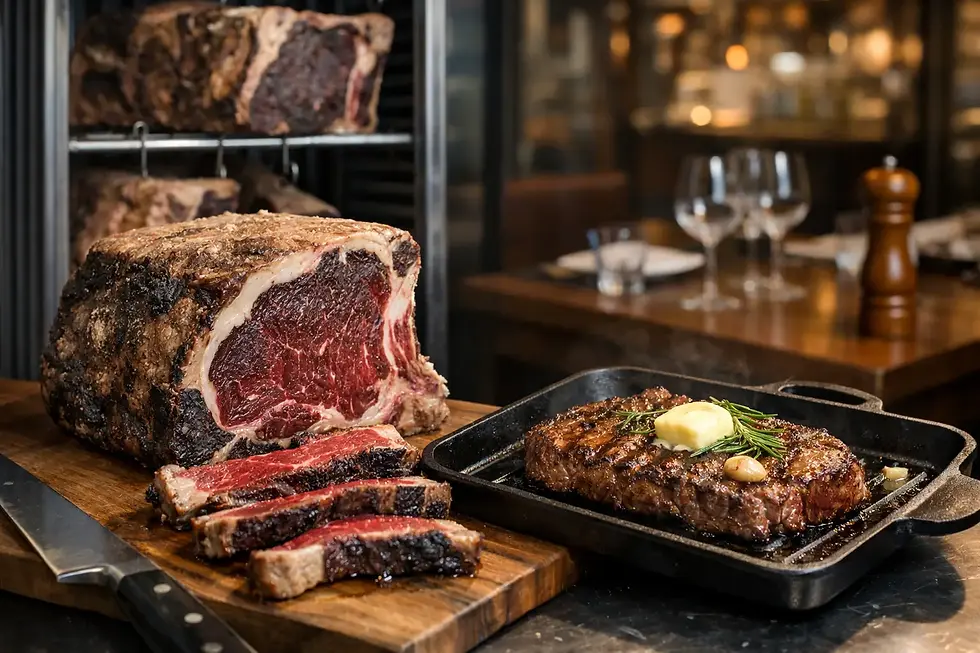
For diners who care about properly aged beef, the distinction is more than a cooking detail. Heat is the final expression of the work done by the butcher, the aging room, and the kitchen. It can highlight a steak's mineral depth and marbling, or cover its subtler qualities. The goal is not simply a dark exterior. It is a steak that tastes clear, generous, and complete with the wine beside it.
What Charcoal Brings to a Steak
Charcoal grilling cooks with fierce radiant heat, along with the gentle movement of hot air and the perfume created when rendered fat meets the coals. That combination creates a flavor no pan can precisely duplicate: savory, lightly smoky, and a little wild in the best way.
A well-managed charcoal fire gives the exterior a beautifully uneven character. Some edges take on a deeper char, while the center remains juicy and tender. This contrast is particularly compelling with richly marbled cuts such as ribeye, where the fire turns fat into a crisp, aromatic accent rather than letting it sit heavily on the palate.
The aroma matters as much as the flavor. Charcoal makes a steak feel like an occasion. It carries energy, conversation, and appetite - the kind of plate that naturally invites a bold red and another round at the table. For a celebratory dinner or a long evening shared with friends, that sense of theater is part of the pleasure.
Still, charcoal demands judgment. A fire that is too aggressive can scorch the outside before a thick steak warms through. Flare-ups can leave bitterness rather than elegance. The cook needs to understand direct and indirect heat, when to move the steak, and when to let it rest. Great grilling looks relaxed, but it is built on attention.
Best matches for charcoal
Charcoal is especially flattering for thicker steaks and cuts with enough fat to stand up to the fire. Ribeye, bone-in cuts, and dry-aged beef often benefit from its savory edge. The aging process concentrates flavor and develops a subtle nuttiness; charcoal can amplify those notes with a clean, appetizing smokiness.
It also suits diners who want a steak with a clear grilled identity. If the flavor you are craving is fire, not just browning, charcoal is the natural choice.
What Pan Searing Does Differently
Pan searing is about intimacy and precision. A heavy pan creates direct, continuous contact between the steak and hot metal, building an even, deeply browned crust through the Maillard reaction. The result can be remarkably refined: crisp at the surface, buttery within, and focused on the beef itself.
Unlike charcoal, a pan does not introduce smoke as the leading note. That restraint can be an advantage. With a tender filet or a leaner strip steak, pan searing lets the meat's natural sweetness, seasoning, and careful aging come forward without competition.
It is also the better tool when control is the priority. A chef can adjust the heat instantly, baste with butter, garlic, and herbs, and monitor the steak closely from first contact to resting. For thinner cuts, this speed and consistency are valuable. The pan creates a luxurious crust without exposing the steak to the uneven intensity of an open flame.
There is a sensory appeal here too. Butter foaming around rosemary, the polished bronze crust, the concentrated juices in the pan - it is a quieter style of drama. Pan-seared steak often feels tailored rather than rustic, especially when served with a composed sauce or a precise side dish.
Best matches for pan searing
Pan searing shines with cuts that reward a fine, even crust and a gentle finish. Filet mignon, strip steak, and smaller portions are natural candidates. It is also excellent for diners who prefer the taste of beef to remain front and center, supported by herb butter or a restrained wine sauce rather than smoke.
A pan can handle a well-marbled steak, of course, but very fatty cuts may create more smoke in the kitchen than a home cook expects. Careful temperature control and a dry surface make all the difference.
Charcoal Grilling vs Pan Searing: The Real Trade-Off
The clearest difference is flavor. Charcoal gives steak a smoky, open-fire character and more variation across the crust. Pan searing creates a more uniform browned surface with a richer butter-and-beef profile. One is expansive and elemental; the other is precise and concentrated.
Texture differs as well. Charcoal often produces crisp edges and a slightly firmer outer layer, especially when the steak is finished over direct heat. Pan searing tends to create a continuous, delicate crust that gives way quickly to a soft interior. Neither texture is better. It depends on whether you enjoy the occasional charred edge or prefer a smoother, more consistent bite.
Then there is the matter of setting. A charcoal-grilled steak feels at home at a lively table, with bottles opened and plates passed around. A pan-seared steak has a more intimate mood. Think of a date night, a quiet dinner, or a meal where the details of the cut deserve close attention.
For home cooks, practical realities matter. Charcoal takes more time to light and manage, while pan searing is faster and easier to repeat on a weeknight. Yet a pan cannot fully recreate the aroma of a charcoal grill, and grilling a thick, beautifully aged steak can be worth the extra preparation when guests are arriving.
The Cut Should Lead the Decision
Before choosing a method, look at the steak in front of you. Thickness, marbling, and aging all influence the best path.
A thick, dry-aged ribeye has enough flavor and fat for charcoal. The grill's heat renders the marbling, while smoke complements the savory intensity developed during aging. Give it time to temper slightly, season with confidence, and use a two-zone fire so the center reaches the desired temperature without burning the exterior.
A filet benefits from the pan's careful touch. Its tenderness is already its strength, so a well-built crust and a quick butter baste add flavor without overwhelming its elegant texture. A strip steak can happily go either way. Choose charcoal for smoke and boldness, or a pan for an even, steakhouse-style crust.
Seafood follows a similar principle. Charcoal gives firm fish and shellfish a welcome touch of fire, while a pan is ideal when delicacy and controlled browning matter most. The technique should serve the ingredient, never the other way around.
Temperature Is the Detail That Separates Good From Memorable
Both methods reward patience before and after the heat. Start with a steak that has been patted dry and seasoned evenly. Moisture on the surface delays browning, whether it is meeting a hot pan or a hot grill grate.
For charcoal, create a hotter direct zone and a calmer indirect zone. Sear over the coals, then move the steak away from the fiercest heat as needed. For pan searing, preheat until the pan is properly hot, then resist the urge to move the steak too soon. That steady contact is what creates the crust.
Most importantly, rest the steak after cooking. A few unhurried minutes allow the juices to settle back into the meat, keeping every slice more tender and flavorful. It is a small pause that protects all the work that came before it.
Choose the Wine With the Cooking Method in Mind
The cooking method can guide the bottle. Charcoal-grilled ribeye has the intensity for a structured Cabernet Sauvignon, Syrah, or a full-bodied Italian red with dark fruit and savory spice. The smoke and char find a natural companion in wines with depth and backbone.
With a pan-seared filet, consider a polished Barolo, Brunello, or mature Bordeaux-style blend. These wines can echo the steak's richness while leaving room for its finer texture. If butter, herbs, or a mushroom sauce are involved, the pairing becomes even more inviting.
At Divino, the pleasure lies in letting these details come together without making dinner feel overly serious: a beautifully cooked steak, a wine chosen with care, and a table that is enjoying itself.
The best choice is the one that fits the moment. Light the charcoal when you want fire, aroma, and a little celebration in every bite. Reach for the pan when you want precision, tenderness, and the quiet luxury of a perfect crust. Either way, give the steak the attention it deserves, pour something worth sharing, and let the evening unfold from there.


Comments